AI Agents Keep Failing in Production — Fix the Workflow, Not the Model
AI agents that dazzle in demos break in production. The cause is almost never the model — it's the workflow and the system around it.
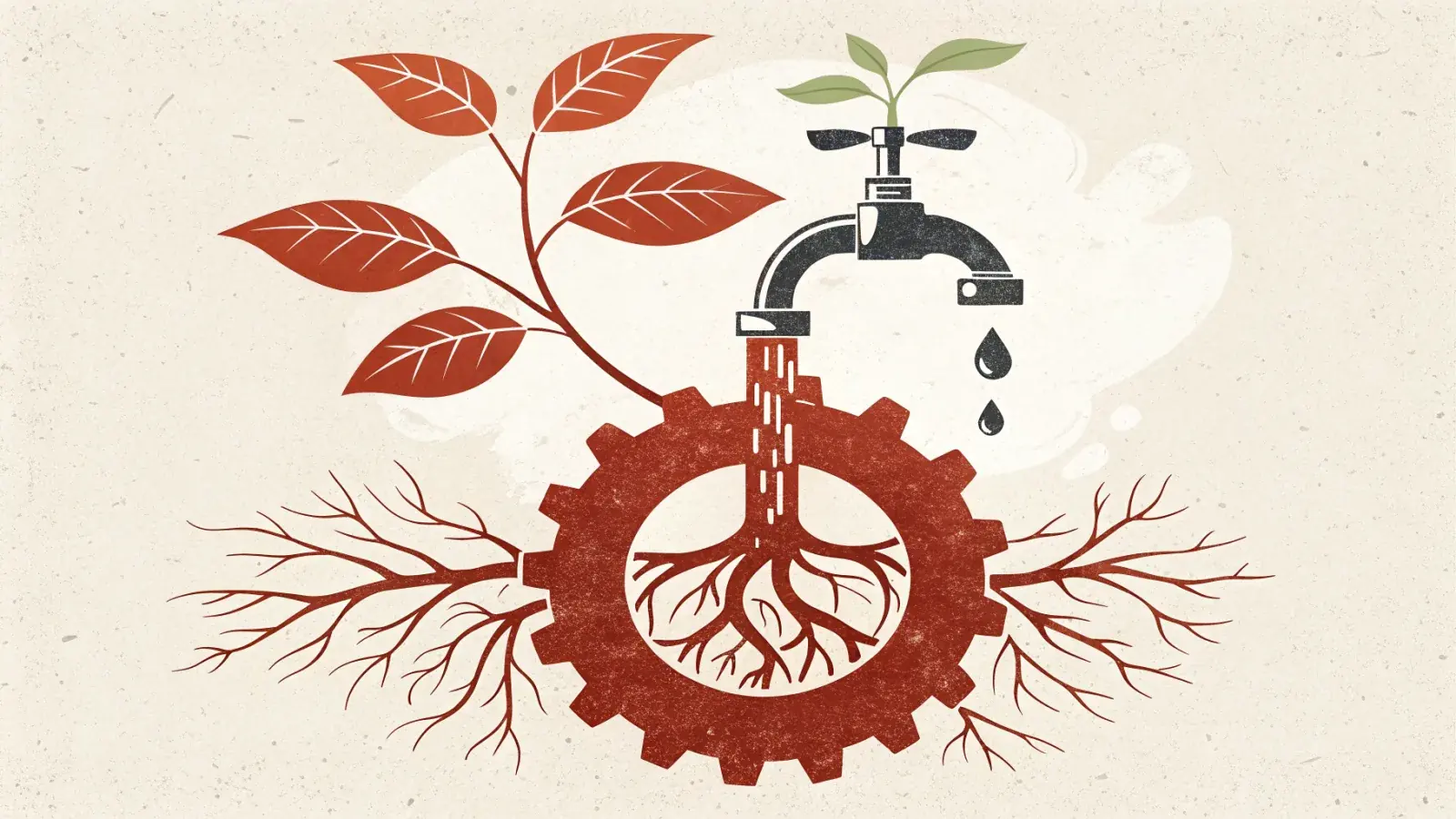
Every few weeks, a new AI agent demo goes viral. Someone wires up a language model to their email, CRM, support desk, and calendar. They ask it a question in plain English. It pulls context from three systems, drafts a reply, updates a record, and schedules a follow-up. The whole thing takes eight seconds, and the replies are full of people saying they just saw the future.
Then those same people try to build something similar for their own team, and within a week they’re staring at a hallucinated customer record, a refund issued to the wrong account, or a support reply that confidently cites a policy the company retired in 2022.
The model isn’t the problem. The workflow is.
The demo-to-production gap is a design problem
Demos work because they control every variable. The input is clean. The data is curated. The task has one obvious path. Real operations have none of those properties.
In a real SaaS environment, half the CRM fields are blank or stale. Internal policies live across a wiki, two Google Docs, and someone’s muscle memory. The same customer might exist as three slightly different records across three systems. A simple-looking action like updating a subscription tier can trigger billing changes, notification emails, and permission shifts downstream.
When an agent encounters this mess, it does what language models do: it fills in the gaps with plausible-sounding guesses. That’s fine when the output is a draft someone reviews. It’s a serious problem when the output is an action that touches money, customers, or data integrity.
The teams getting burned aren’t the ones using bad models. They’re the ones treating agents like autonomous employees instead of workflow components that need guardrails.
What actually works
The most reliable agent implementations I’ve seen share a few traits. None of them are flashy. All of them hold up under real load.
They separate reading from writing. The single most effective constraint you can apply is letting your agent read broadly but write narrowly. Let it pull data from five systems to build context and make a recommendation. But don’t let it push changes back to those systems without a checkpoint. Most of the value comes from the synthesis anyway — the actual write action is often a few fields that a human can confirm in seconds.
They force structure between steps. Natural language is great at the edges of a workflow — interpreting a messy customer email, generating a human-readable summary. It’s terrible in the middle. Once the model has made sense of an input, convert the result into structured data: priority level, issue category, recommended action, confidence score, source references. Structured handoffs between steps are easier to inspect, easier to retry, and dramatically easier to debug when something goes sideways.
They start with one decision, not an entire department. The temptation is always to automate broadly. Resist it. Pick a single recurring decision that already has a rough playbook — triaging inbound support tickets, classifying expenses against budget categories, turning sales call notes into structured CRM updates. Get that one thing working reliably. Then expand. Teams that try to build the everything-agent end up with an everything-is-broken agent.
They monitor what the agent didn’t do. Every agent implementation should track its uncertainty — the cases where it couldn’t classify cleanly, where it lacked context, where a human overrode its suggestion. Those exceptions aren’t failures. They’re your roadmap. (For the concrete version of this — the specific failure modes and the observability that catches them — see our AI agent production reliability checklist.) They tell you whether the gap is in your knowledge base, your data quality, your prompt design, or your process itself. Teams that review exceptions weekly improve fast. Teams that only track completion rates plateau.
The approval layer nobody wants to build
There’s a persistent fantasy that the right prompt engineering or the next model upgrade will make human review unnecessary. It won’t, at least not for anything that matters.
The best agent workflows bake in lightweight approval at every point where an action is irreversible or customer-facing. That doesn’t mean a slow, bureaucratic review queue. It means showing the reviewer exactly what the agent wants to do, what evidence it used, and how confident it is — then making it trivially easy to approve, edit, or reject.
The goal isn’t to slow things down. It’s to keep humans in the loop at the moments where being wrong is expensive, while letting the agent handle everything else autonomously. Most workflows have a surprisingly small number of these high-stakes decision points. Identify them, add a checkpoint, and let the rest run.
Where the real value lives
The biggest gains from AI agents aren’t in replacing people. They’re in eliminating the dead time between systems, decisions, and actions.
A support agent spends minutes per ticket just gathering context from different tools. An AI agent can do that in seconds and present a structured summary. A sales rep spends the last fifteen minutes of every day updating CRM records from memory. An AI agent listening to call transcripts can draft those updates immediately. An ops team spends hours each week reconciling data between platforms. An agent can flag discrepancies and propose resolutions.
None of that requires an autonomous super-agent. It requires well-scoped automation with clear inputs, structured outputs, and sensible checkpoints.
The uncomfortable truth
If your processes are already chaotic for humans — undocumented policies, inconsistent data, unclear ownership — an AI agent will surface that chaos faster than any audit ever could. It won’t fix it.
The teams getting real value from agents right now aren’t the ones with the most sophisticated models. They’re the ones that did the unglamorous work of cleaning up their data, writing down their rules, and designing workflows that don’t depend on tribal knowledge.
An AI agent is a force multiplier. Good structure multiplied by a capable model produces reliable automation. Bad structure multiplied by a capable model produces confident mistakes at scale.
The investment that matters most right now isn’t picking the right agent framework. It’s making your workflows legible enough that any agent — current or future — can operate within them safely. That’s less exciting than a viral demo. It’s also what actually ships.